WordMap
What makes a word difficult to read? The standard approach to understanding word difficulty concerns a combination of factors related to the word's frequency and the extent to which it can be explained in terms of spelling-sound rules. However, words vary in terms a many different complex and interacting factors associated with their spelling, sound, and meaning.
Project WordMap aims to advance our understanding of the multidimensional nature of word difficulty using machine learning techniques to map word features onto the difficulty of learning to read a word. Utilizing the recent database of word reading difficulty, The Developmental English Lexicon Project, published by researchers at the Florida Center for Reading Research (Compton et al., in press; https://fcrr.org/projects/delp), this project will explore the complex interplay between word features (both newly created and existing) in the prediction of word difficulty. The research is being led by FCRR Core Faculty Dr. Ashley Edwards (PI) and Matt Cooper Borkenhagen (co-PI), and aims to (1) create 12 new word feature variables to represent important attributes of words; (2) examine feature interactions to better understand relationships between word characteristics and difficulty; (3) develop predictive models for estimating word difficulty using machine learning techniques (e.g., artificial neural networks, regression trees, and more) and in the presence of missing data and validate these models on holdout datasets; and (4) expand the d-ELP database by including predicted word difficulties for a larger set of words along with their features, making this resource accessible for facilitating research on word reading.
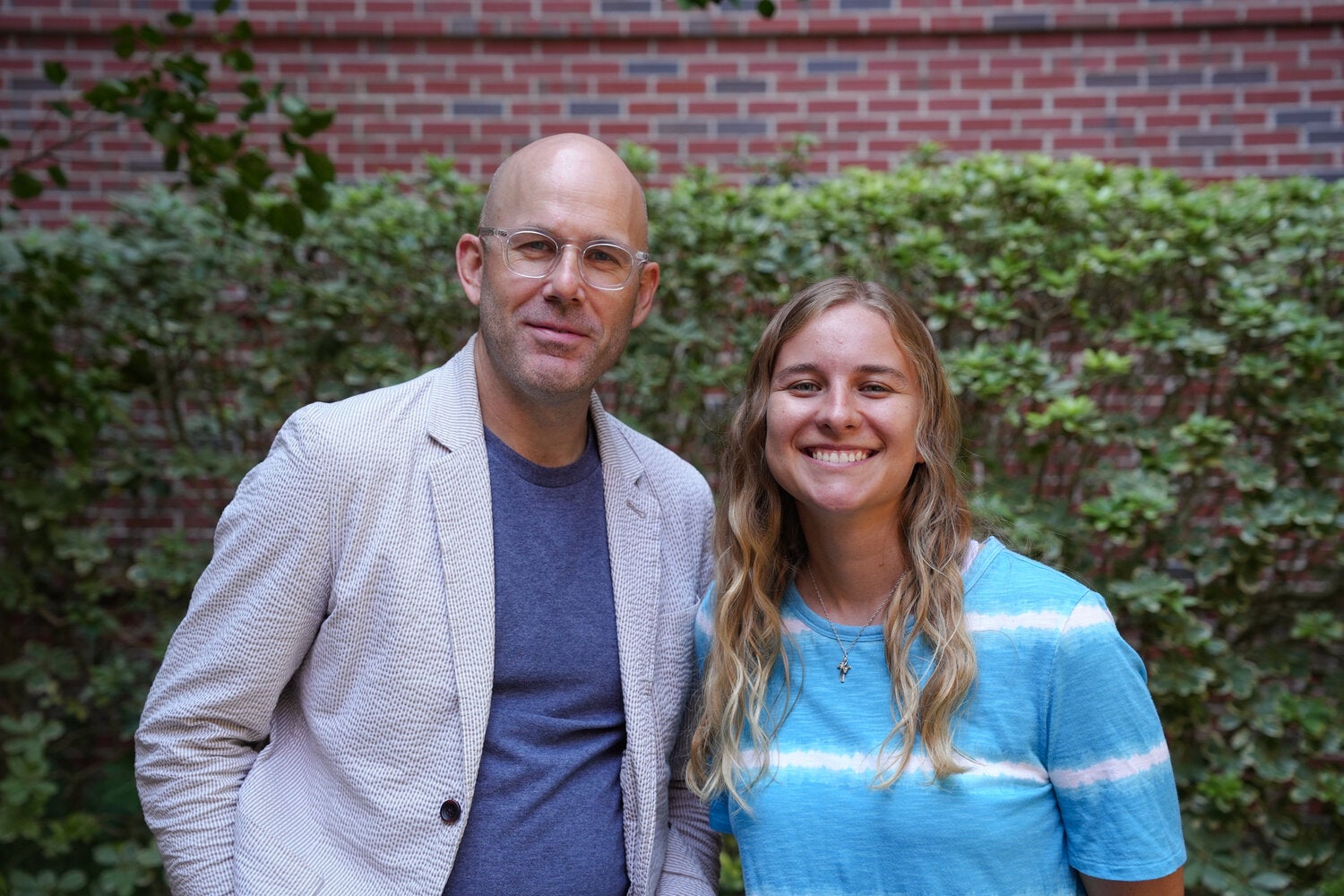
Dr. Ashley Edwards, Principal Investigator (right) and Dr. Matt Cooper Borkenhagen, co-principal investigator (left)